Treading on the green and thinking of the past
Today is Qingming Festival, a time to worship ancestors and go for a walk in the greenery.
The summoner returns to his hometown not only with memories of his relatives but also with the flavors of his homeland.
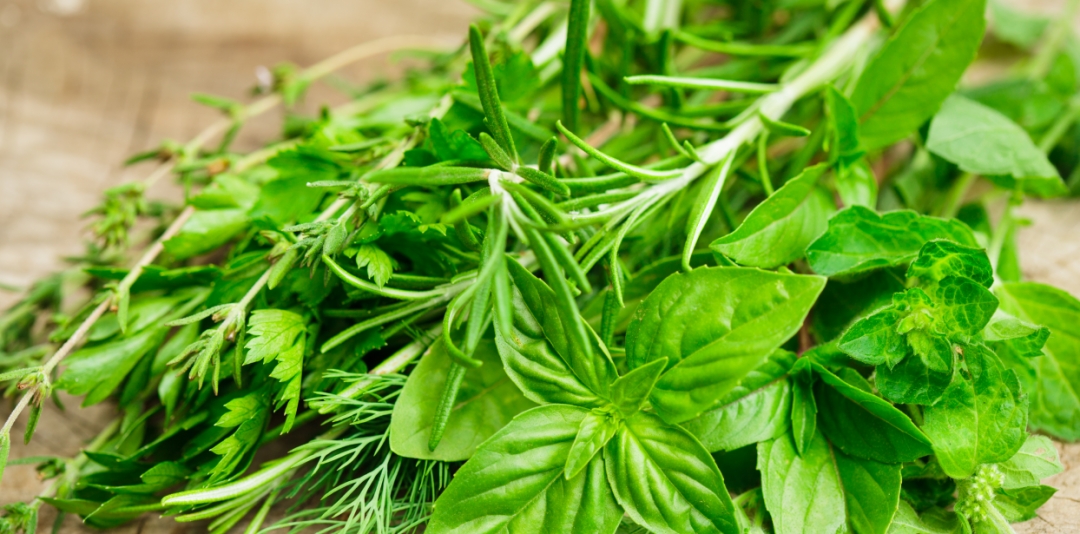
Wild vegetables of my hometown
Wang Zengqi's Collected Works
WenWang Zengqi
Sheep's-foot grass. Sheep's-foot grass is a wild vegetable, but in my hometown it is good enough to be served at the table. In our area, at a normal banquet, there are always eight cold dishes before the guests are seated. They usually include ham,1 hard-boiled eggs (sunny-side up eggs), wind-dried chicken, braised duck, stir-fried shrimps (or raw shrimps), razor clams (which are transported from outside, as they are not produced in our area), salted duck eggs, etc. If it is spring, there will be two seasonal cold dishes: young radish (i.e. the small water radish of Beijing) cut into thin shreds mixed with jellyfish, and mixed sheep's-foot grass. Sheep's-foot grass is blanched, chopped finely, mixed with fine pieces of firm bean curd, ginger flowers, and drizzled with sesame oil, vinegar, or shrimps, if desired. This dish is often shaped into a pagoda, knocked down before eating, and mixed well. Mixed sheep's-foot grass is always popular, especially for those who like something fresh. All wild vegetables have a freshness that is lacking in domestically grown vegetables.

This paper is selected from
Wang Zengqi's Collected Works
Wang ZengqiAuthor
Lin XianzhiSelected
Flower City Publishing House出版
Most people eat shepherd's purse raw, stir-fried shepherd's purse is rare. Shepherd's purse can be used to wrap spring rolls and sweet dumplings (tangyuan). People in the south use shepherd's purse to wrap wonton, called vegetable和meat wonton, also known as“big wonton”. We don't have wonton wrapped with shepherd's purse in our place. The wonton sold in the noodle shops in our place are all pure meat filled wonton, which is what the south calls“small wonton”. There is no“big wonton”. I had a famous family restaurant in Beijing, and I had a famous dish there: jade egg custard. In a soup bowl, there is half egg custard and half shepherd's purse, half tender yellow and half dark green, never mixed, and mixed when eating. This kind of refined eating is not available in my hometown.
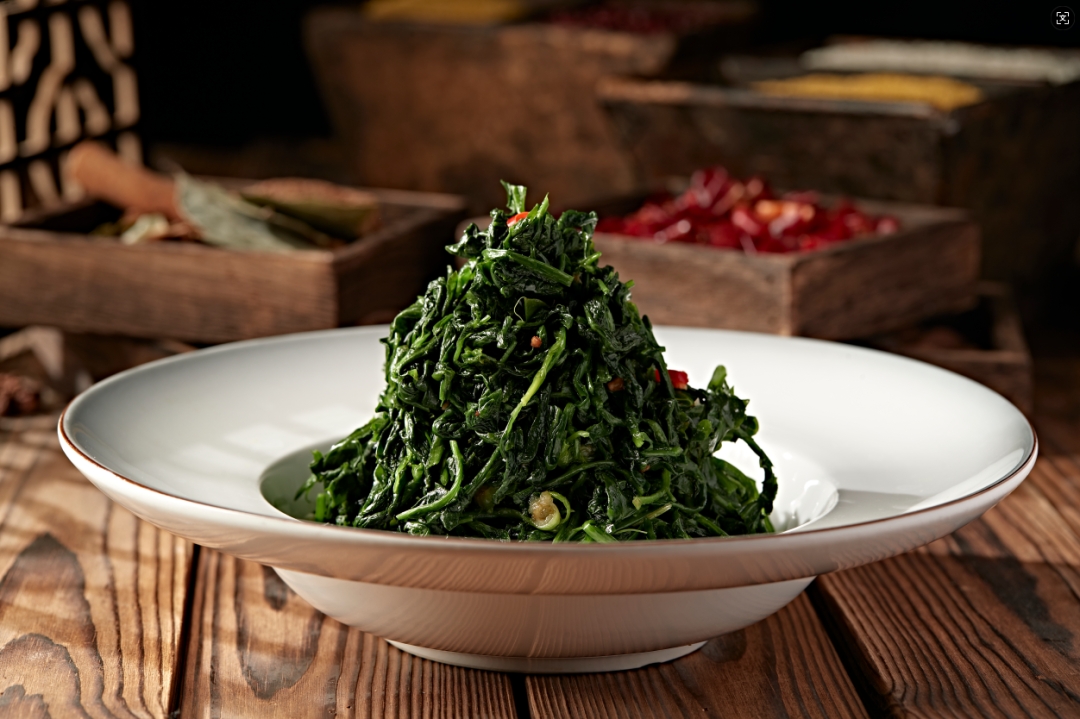
Sheep's-foot grass
Goji Berries. On a spring morning, especially after a light rain, you can hear the cries of "Goji Berries!" selling. The vendors are often young girls from nearby villages, and their voices are clear and carry far:“Selling goji berries!”Goji berries are placed in a bamboo basket, a long and oval basket called a "yuanbao" basket. The goji berries are fresh with rainwater, and the girls' voices are also filled with the rain. Goji berries are not very expensive, and there is no need for a scale. A few coins are enough for them to pour the whole basket into your hands. The girls do not take this as a serious business, just to make a little money for a bottle of hair oil.
Pick it yourself, it's not troublesome. In a moment, you can pick a pile. Goji berries are everywhere."Tian Di Tan". The four sides of the walls of the Tian Di Tan are all covered with this. Goji berries bloom small white flowers in summer and bear many small red fruits in autumn, namely goji berries, which we called"dog milk"when we were young, because it looks very much like a dog's milk.
The heads of goji berries are also raw, and the fragrance is not more intense than that of wild garlic.
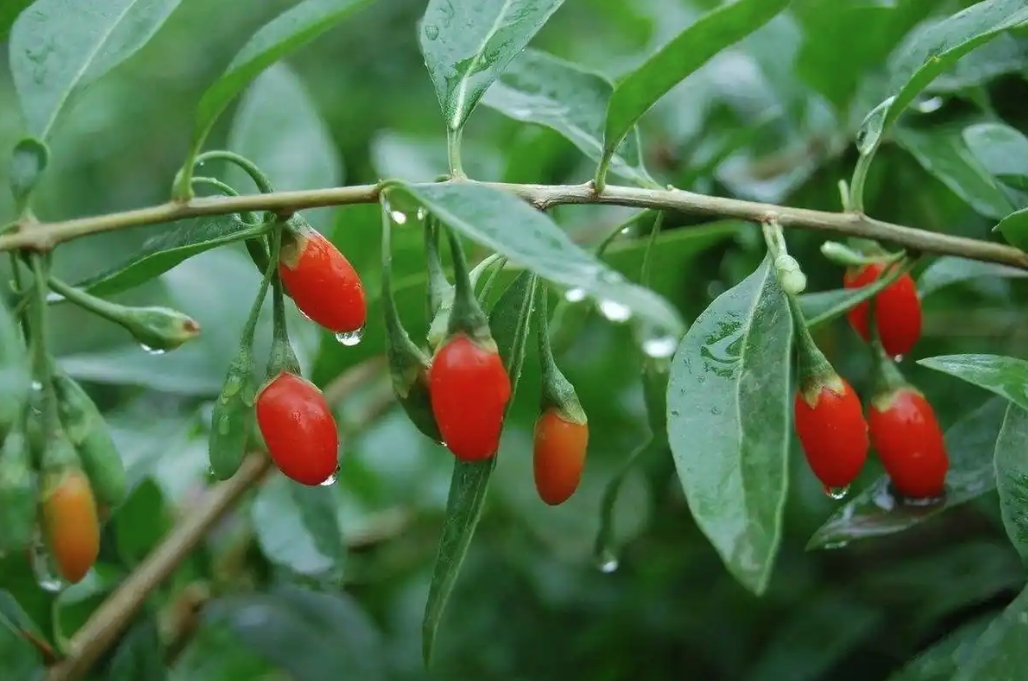
Goji leaf
Arundinaria。Novel "The Big Pool":"At the beginning of spring, the water warms up, and many purple-red reed shoots and gray-green arundinaria sprout on the sandbank, and soon it is a green expanse."I added a note under the pages:"Arundinaria is a wild grass growing by the water, as thick as a pen, with joints, and grows narrow leaves, which are about two inches high when they first come out, called"Arundinaria Shoots, which is very fragrant when stir-fried with meat....Arundinaria, which is noted in the dictionary as"Lou,"is a kind of Artemisia, namely white Artemisia. I think arundinaria is not a kind of Artemisia. The smell of arundinaria is different from that of Artemisia. It has a kind of aquatic grass smell. Su Dongpo's poem:"Arundinaria full of the ground, short reed shoots,"proves that it is a plant growing by the water, which is what my hometown calls"Arundinaria Shoots.""Lou"is not read as "Lou" in my hometown, it is read as "Lv". Arundinaria seems to be stir-fried with lean pork, and there seems to be no stir-fried. When I was a child, I loved to eat stir-fried arundinaria shoots very much. There was a plate of stir-fried arundinaria shoots on the table, and I was very excited and my appetite was very good. Arundinaria shoots are not only fresh but also very crispy, and there is a sound when chewed.
I have occasionally eaten shepherd's purse and goji berries when I was away from home, but I have never eaten reed shoots since I left my hometown at the age of nineteen, and I miss them very much. Last year, someone in my hometown drove a car to Beijing for business, and my younger brother and sister asked them to bring a plastic bag of reed shoots. Because of the delay on the way, they were already spoilt when they arrived in Beijing. I picked out some that were not too bad and fried a plate, and there was still a bit of taste.
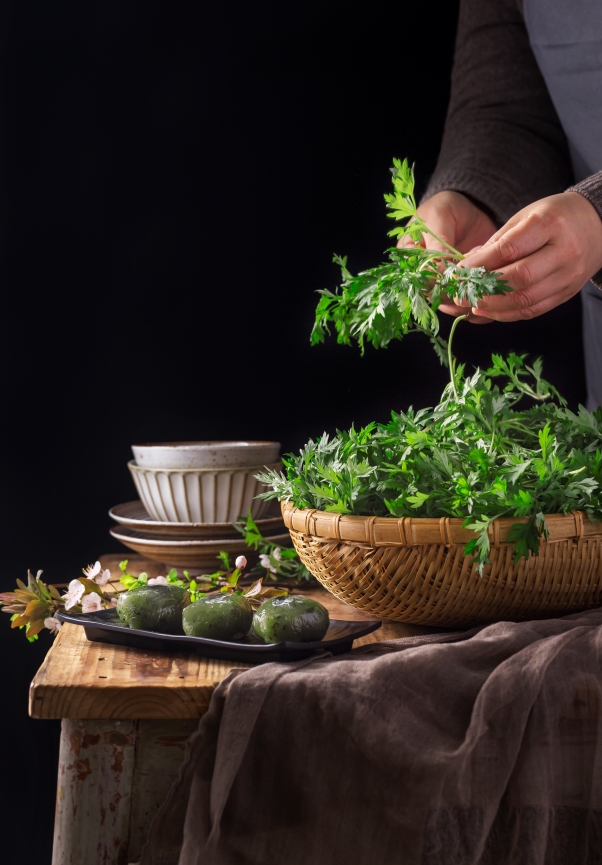
Rush Sinica
Portulaca oleracea. It was very common to eat Portulaca oleracea in ancient China, and it was mentioned together with Amaranth (red and white amaranth). Later, for some reason, fewer people ate it. My grandmother would pick some every summer, dry them, and make dumplings for the New Year. Ordinary families in my hometown did not usually make dumplings. They only made them for the New Year, for their own consumption, and to steam a plate for guests. They were not made by the family members. Ordinary housewives did not know how to make them, so they would prepare the flour and filling, and invite the masters from the dumpling shop to make them at home. They would make them for a morning, and it would last for the whole January. My grandmother was a vegetarian, and her Portulaca oleracea dumplings were only eaten by herself. I tried one, and the Portulaca oleracea had a slightly sour taste, it was not bad, nor was it good.
Maize is found in both the north and south. I lived in Gajiaokou in Beijing, which is very close to Yuyuan Tan, where there is an abundance of maize. Beijingers call it "maixianercai," and very few people eat it. Birdkeepers pluck it to feed to their songbirds. It is said that songbirds can clear away heat if they eat it. Songbirds will also have "fire"?
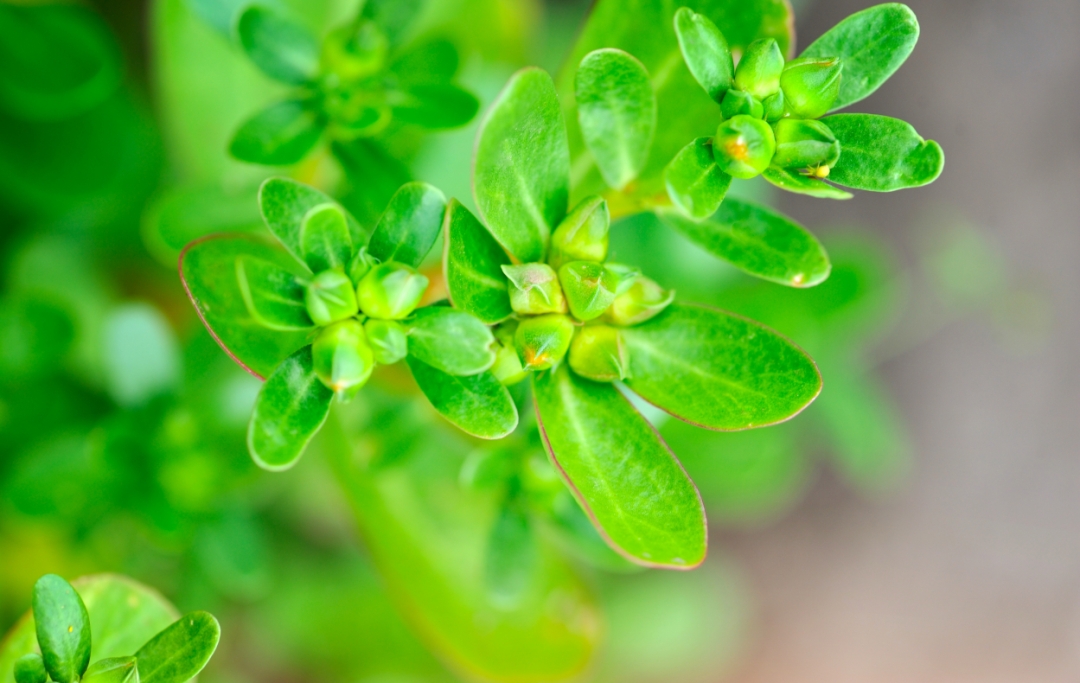
Portulaca oleracea
Wan Cai. The first time I had Wan Cai soup was at the Lóu Wài Lóu in West Lake, Hangzhou, in April 1948. Before that, I had never eaten or seen Wan Cai. My hometown people don't know what Wan Cai is. However, Qin Shaoyou has a poem "To Zizhong with Wan Cai, Geng, and Zha Jie", which shows that Gaoyou originally had Wan Cai. The last line of the poem is“Zé Jū Bèi Lǐ Wú Mí Lù”. Qin Shaoyou was probably living in Gaoyou at the time, and what he sent to Su Dongpo was a local product of Gaoyou. Is there still Wan Cai in Gaoyou now? When I go back to Gaoyou, I have to investigate.
During the Ming Dynasty, my hometown produced a scattered曲 writer, Wang Pan. Wang Pan's courtesy name was Hongjian, and his nickname was Xilou. His scattered曲 works are collected in "Wang Xilou Yuefu". Wang Pan was very famous at that time, and he was called ""The Crown of Southern Qu""together with the scattered曲 master Chen Dashi.There is still a proverb in Gaoyou now:"Wang Xilou marries a daughter-more talk than silver.Wang Xilou has a rather special work: "Wild Vegetable Spectrum". "Wild Vegetable Spectrum" contains fifty-two kinds of wild vegetables. Some of the fifty-two kinds are familiar to me, such as Bai鼓钉 (dandelion), Pu'er根, Ma Lan Tou, Qing Hao Er (i.e. Artemisia capillaris), Gou Qi Tou, Wild Green Bean, Lu Hao, Jie Cai Er, Ma Chi Xian, Hui Zhu. Jiangnan people value Ma Lan Tou. When I was a child, I read Zhou Zuquan's "Wild Vegetables in My Hometown", which mentioned a children's song:"Jie Cai Ma Lan Tou, sister marries at the back door", which I really admired, but it is not often eaten in my hometown. The word "linein Hui Zhu should be "Alismatis, commonly known as Hui Cai. This thing is not eaten in my hometown. I first ate Hui Cai at a friend's home in Shandong, dipped in thin noodles, steamed, and then with minced garlic, it has a unique flavor. Later, I taught at a middle school in Huangtu Slope, Kunming, and the school could not pay the salary, so we often ran out of food, and we often stole Hui Cai to fry and eat. In Beijing, I also picked Hui Cai to cook. Once, I found a lot of Hui Cai growing outside the wall of the Diaoyutai State Guesthouse, which was very fat and tender, so I bent down and picked a lot, and put it in my schoolbag. The gatekeeper found out and walked over and asked:"What are you doing?"He probably thought I was planting time bombs. I took out the grey mustard from my schoolbag and showed it to him, he didn't say anything else and walked away. Grey mustard has a slight alkaline taste, which I really like. There are some in Wang Xilou's "Wild Vegetable Spectrum", which I not only have not eaten, seen, but even heard of, such as:“Swallow does not come to fragrance”, “Oil shimmering”...
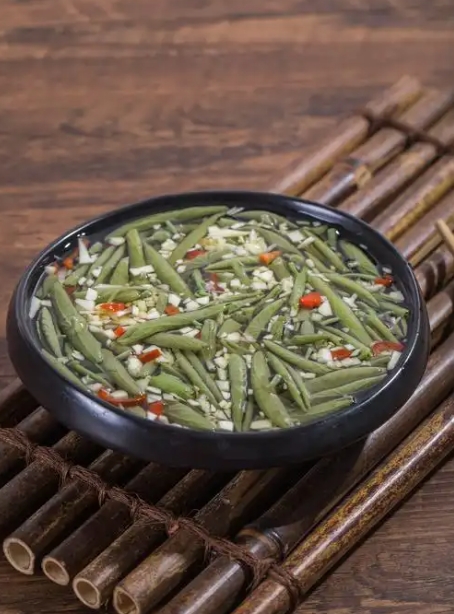
Bok choy
The Wild Vegetable Spectrum is above the picture and the text below. The pictures show the appearance of this wild vegetable, and the text simply says the growing season and the way to eat it. A poem is attached at the end of each text, a small Yuefu song that is similar to a nursery rhyme, all of which are a way of expressing the sufferings of the people through the name of the wild vegetable. For example:
Eye-catching
Eye-catching dishes, such as Zhangmu.
Year after year, I look forward to spring's arrival, still hoping for the time when the ripened fruit will come.
What is it that never tires year after year? I'm worried to see the waves washing away the houses in all directions.
Cat ears
Cat ears, listen to my song,
This year's flood damages the fields, the granary is empty, the rats abandon their nests, what will the cats do?
Jiang Ji
The river is green with water, and the river bank is green with grass; the girl who is picking vegetables cries.
My parents are dead and my brother takes advantage of the situation, leaving only my sister and me to look after the house.
Mugwort
Holding grass, deep roots, inseparable, like lacquer.
You don't see yesterday the child sold on the merchant ship, the child hugged the mother and cried and wouldn't let go.
The feelings in these poems are very sincere and reading them makes one's eyes moist. My hometown is a poor place with many famines, mainly floods, family destruction, and the selling of children is a common occurrence. I have seen it when I was young. Now, the water conservancy has been greatly improved, and even last year's special flood did not claim any lives, and the tragic scenes described by Wang Xilou no longer exist. Thinking of this, I feel relieved for my hometown. In the past, people in my hometown ate wild vegetables mainly to get through the famine, but now they eat wild vegetables to enjoy the newness. Oh, the wild vegetables of my hometown!
April 14, 1992