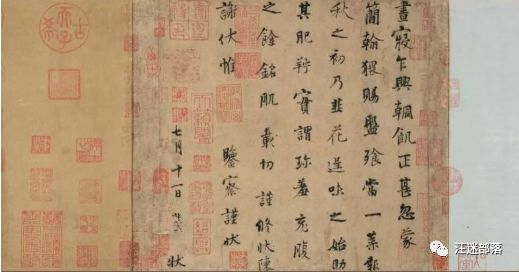
Yang Dingshi of the Five Dynasties was a transitional figure between Yan, Liu, Ou, and Zhu of the Tang Dynasty and Su, Huang, Mi, and Cai of the Song Dynasty. I really like his calligraphy, especially "The Ode to Leek Flower". Not only is his calligraphy excellent, but the article is also very charming.
(Wan Shu Pai)
Not long, recorded as follows:
I was very happy to have a nap, and I was very hungry in the morning. Suddenly, I was honored to receive a letter from you, and you kindly gave me a plate of food. At the beginning of the autumn, when the first leaf falls, it is the beginning of the taste of garlic flowers. It is a real delicacy. After filling my stomach, I will always remember it. I humbly write this letter to express my gratitude, and I hope you can understand it.
July 11thConformity
What excites me is:
1. The "Yi Hua" is mentioned in the "Fa Tuan", this is the *** time, perhaps the *** time. This "Fa Tuan" is named "Yi Hua", and the text is complete, the whole article is readable, and it reads like modern people's language, which is very intimate.
I read little, so I saw the scallion in“literary works”for the first time. Such things as scallion, though very common, are very interesting and should appear in literary works.
Second, Yang Ningshi was an old minister of the Five Dynasties of Liang, Tang, Jin, Han, and Zhou, and he was a“high official”, but he was so grateful for a little scallion sauce given to him by a friend that he wrote a formal letter (Yang Ningshi often wrote in cursive script, and Huang Tingjian said:“Who knew that the wind of Luoyang, Yang Fengzi, would have his brush reach the silkof theU,” but The Scallion Sauce Poem is in running script).
This reminds us that the Viceroy's tastes were not very far from those of the common people. At that time, gifts between relatives and friends were probably nothing more than things like chives. Today, I'm afraid it wouldn't work.
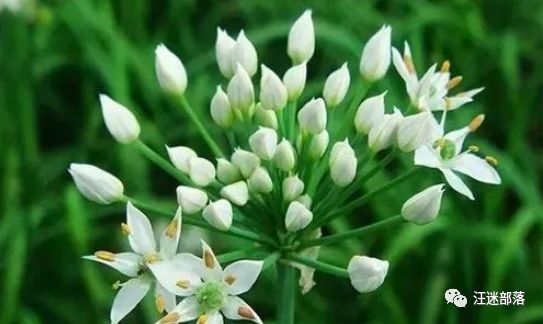
Three, I have no idea how this chives flower is made, is it stir-fried, or pickled? But it looks like it's eaten with mutton.“Help its fatWan”,“Wan”is a lamb that is five months old, Yang Nisi may not have really eaten a five-month-old lamb, but because the“Book of Songs·Minor雅·Felling Wood”There is a“
But it is certain that the two should be eaten together. Beijing now eats hotpot mutton, which is inseparable from garlic sauce, or people may think that this method comes from Mongolia or the Western Regions of the Hui nationality, in fact, it already existed in China during the Five Dynasties. Yang Ningshi is from Shaanxi, and he started to eat mutton with garlic sauce, which originated in the northwest provinces of China.
The Beijing style of jiaozi is pickled and then ground, with juice. It is not only an indispensable condiment for eating hotpot, but it can also be eaten as a pickle on its own. Boil a pot of dried shrimp, Chinese cabbage, and add a plate of jiaozi, or stinky tofu, or braised shrimp sauce, with a steamed bun and pancakes, in a Beijing home, it's a nice meal.
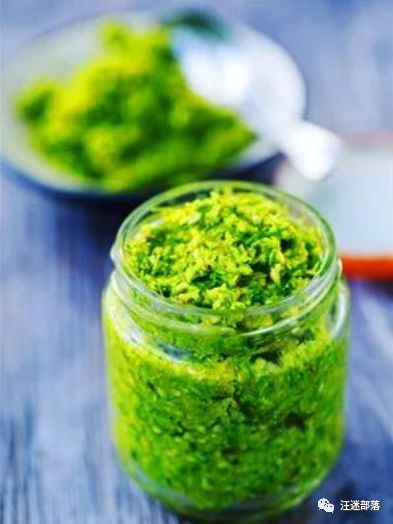
In the old days, when I was studying opera in the company, we were given food to eat, but there were no dishes. Leek flowers, green pepper paste, soy sauce, and a pot of hot water in a big wooden bucket, that's all. Leek flowers are very cheap, take an empty bowl, go to the oil and salt shop, three or five cents, and the salesperson can give you half a spoonful with an iron spoon. Now it's all changed to glass bottles, not sold by the piece, a bottle costs more than a yuan, it's very expensive.
In the past, wealthy families would preserve their own leek flowers, which, when combined with sand fruit and Beijing white pear, were finely chopped and considered a delicacy.
The scallion-pickles of Yunnan are different from those of the north. The scallion-pickles of Kunming are different from those of Qujing. The scallion-pickles of Kunming are pickled in sauce with a lot of chili peppers. The scallion-pickles of Qujing are white and are pickled with scallions and extremely fine shreds of pickled radish, which are very fragrant, not very salty, and have a faint sweet taste that can't be described.
The Qujing jiao ci is packed in a earthenware jar that looks like a tea canister. Everyone who goes to Qujing brings a few jars to give away. I often think the Qujing jiao ci is the “divine product” among Chinese pickles.
My hometown does not know how to preserve the scallion flowers, but only when the scallion flowers are still buds and have not yet bloomed, together with the tender shoots that can be pinched, cut into inch segments, and stir-fried with lean pork, this is " seasonal dish". After those few days, the shoots become old and cannot be eaten. To make shrimp cakes, with the bottom of the stir-fried scallion buds, it is unspeakably beautiful.
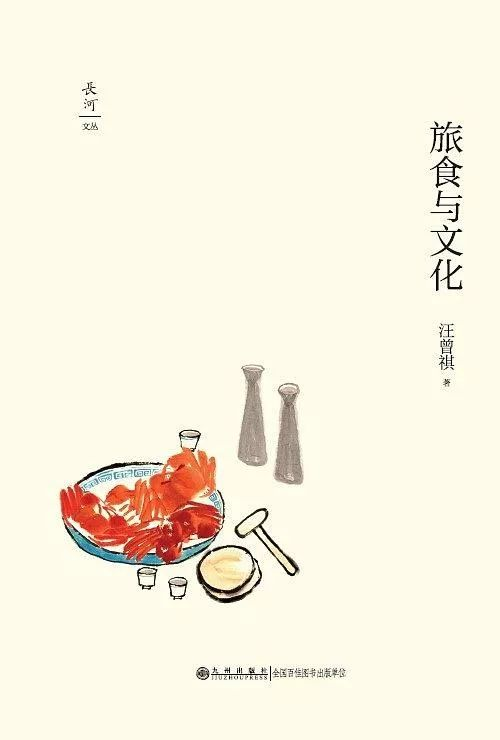
Travel, Food, and Culture
Author: Wang Zengqi
Publication: Jiuzhou Publishing House
Wang Lao's Travel Food and Culture
Travel and Food Culture is a collection of essays compiled by Wang Zengqi himself before his death, mainly including his beautiful writings on travel and food. This book has been out of print for many years, and this is a new edition after careful proofreading.
Wang Zengqi was a student of Mr. Shen Congwen, and also the literary heir of his works, whose works contain infinite enthusiasm for life and elegant charm. Mr. Wang was also a man of temperament, naturally unrestrained, and liked to travel and enjoy food. He once sighed:“How good it is to be alive!”
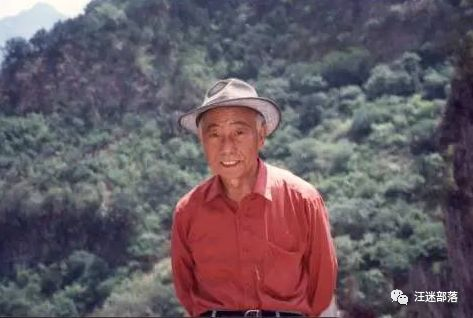
Follow Mr. Wang to appreciate beautiful writing
Follow Mr. Wang to enjoy the beautiful scenery
Follow old Wang to taste the delicacies
Wangaddict, Wang fan……Who***iron, who***fire, it's up to you:“Centennial Wang Lao”The internet celebrity's text selection competition has sounded the gong and opened the curtain!(For details, please click to read)
The illustrations, text, and audio in this article that do not have an attributed author.
Please have the author contact WeChat君 to add a note.
Read the original text