A literary person, if he does not want to grow old quickly, had better engage in a bit of modernism and accept a bit of Western influence.
Butold
Wang Zengqi
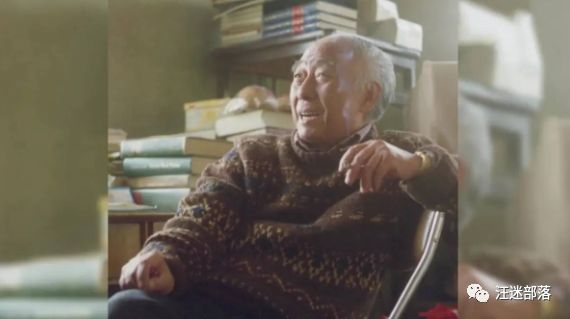
Confused, one grows old. I don't know when, but people started calling me "Old Wang" instead of "Wang Old". One of the signs of old age is a poor memory. When I first meet someone, after a warm handshake introduced by someone, I forget who this person is. Some friends I have met more than once, and we have talked and met in meetings, but I just can't remember how to address them. Sometimes when I receive a phone call and make an appointment, I think I have remembered it, but I have completely forgotten. However, some old things, including details, are remembered very clearly. This is one of the ""Ten Contradictions" of old age, and everyone gets old this way. On the other hand, I am not yet very old, and my eyes are still not old. The first sign of old age is in the eyes. The eyes of the old are lifeless, and the eyes are empty, which means that he has lost the keenness of his thoughts and can not concentrate. I don't feel this way yet. A few years ago, the "March Wind" magazine asked Ding Cong to draw a cartoon portrait of me and asked me to write a few words as a portrait praise. I wrote four lines of poetry:
Nearby things are blurred, distant things are true, and my eyes are fortunately not completely blurred.
It is not easy to reform in old age, and another spring after singing the lotus.
One must grow old, but one should try to grow old slowly.
To keep oneself from growing old more slowly, one must first keep one's thoughts young and prevent them from becoming rigid. The important thing, even the only thing, is to have more contact with young people. This year5in May, I wrote a preface to the novel collection of the young poet Wei Zhuyuan, saying:
Last year, I wrote prefaces for several young writers and read some of their works. Each time was a new experience, a shock to my aging, and a rain on my strange old bonsai.
……
A writer like Zhiyuan does not need“mentor”. (Zhiyuan is a graduate student I taught at the Lu Xun Literary Institute, so I can be considered his mentor), no one can mentor him. No writer needs a mentor. I am not Zhiyuan's mentor, but a friend. Because of the age difference, we can be considered a跨-generation friendship. All elderly writers should have more than one cross-generation friend. A cross-generation friendship is not for mentorship, but for receiving mentorship, or, to be more euphemistic, to accept influence and inspiration. This is the only way to combat aging.
I'm saying it's a straight up thing, not dramatic. But it doesn't apply to some people.
To keep the mind lively, it is necessary to use it often. There is a spring in Jinci Temple in Taiyuan called“Never grow old”. There is a pavilion, and in the pavilion there is a small vertical plaque written by Fu Qingzhu, which reads“Forever give never grow old”. The spring never grows old because it flows. The human mind is also like this. If it is used often, it will be flexible and agile. If it is not used when old, it will become dull and even suffer from dementia. The best way to use the mind is to write articles. Ordinary thoughts about things often pass away when they are just thoughts. If you want to write them down as articles, you have to think more, so that your thoughts are logical and orderly, and at the same time you will also discover richer meanings hidden in these things. In order to write articles, especially prose, you have to read some books. When you read books casually and have some discoveries, you often just read and forget about it. But when you want to write something, it is different. Mr. Zhu Guangqian said that reading for writing will read more carefully and deeply, which is a matter of experience. The more you write, the more you have; the less you write, the less you have. Farmers learn to farm, and the old often say“the more you use your strength, the more you have”. Writing articles is also like this. When you read with questions, you often find related materials. Recently, I re-read "Notes from the Reading of the Grass Hall", originally for the purpose of verifying Lu Xun's evaluation of this book (I once thought that Lu Xun's evaluation was too high), but I found from the book that Ji Yao'an, the father of Ji Xiaolan, was a very interesting person. His thoughts are very thorough, so I wrote an essay "Ji Yao'an's Opinions". This was something I did not think of before. Therefore, I became interested in the thoughts of the scholars of the Qianlong and Jiaqing periods, and I really want to read the books of Dai Leiyuan and Yu Lichu. Writing articles has引起的 interest in reading books, which is the biggest gain. It is best to develop the habit of writing. Mr. Lao She said that he has something to write or nothing to write, and he has to write at least five hundred words a day, so until later, his pen is still very agile. A writer is the most full and the happiest when he is writing. Comrade Sun Li said that writing is his best rest, and I have the same feeling. Continuous writing is the way to longevity. However, the old write, like climbing a mountain, and cannot run too fast. Like young people, they cannot work day and night, and finish thousands of words at a stretch, which is not allowed.
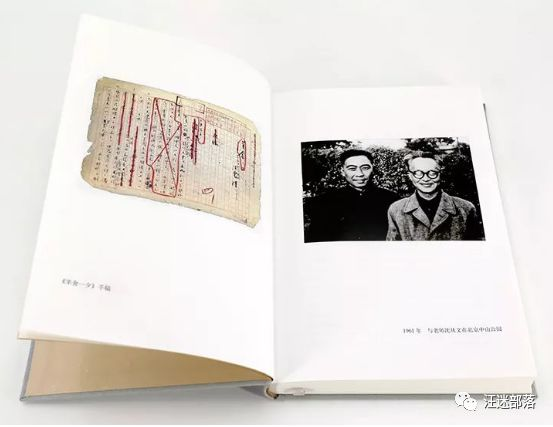
一个弄文学的人,倘不愿速老,***能搞一点现代主义,接受一点西方的影响。上个月,应台湾《联合日报副刊》之邀,写了一篇小文章。文章小,题目却大:《二十一世纪的文学》。我认为本世纪中国文学,颠来倒去,无非是两个方面的问题:一个是现实主义与现代主义的问题;一个是继承民族传统与接受外来影响的问题。前几年,在北京市作协举行的讨论我的小说的座谈会上,我于会议将结束时作了一个简短的发言,题目是《回到现实主义,回到民族传统》,好像这是我的文学主张。所以说“回到”,是因为我年轻时接受过西方现代派的影响。经过一段时间的磨炼,我觉得现实主义是仍有生命力的;一个人,不能脱离自己本土的文化传统,否则就会变成无国籍的“悬空的人”——我曾用这题目写过一篇散文,记几个美国黑人学者的心态,他们的没有自己的文化、没有历史的深刻的悲哀。所谓“祖国”,很重要的成分是祖国的文化。为了怕引起误会,我后来在别的文章里作了一点补充:我所说的现实主义是能容纳一切流派的现实主义;我所说的民族文化传统是不排斥外来影响的文化传统。现实主义和现代主义是可以溶合的;民族文化和外来影响也并不矛盾,它们之间并非渭泾分明,作家也不必不归杨则归墨,在一棵树上吊死。二十一世纪的文学,可能是既是更加现实主义的,也是更加现代主义的;既有更浓厚的民族传统色彩,也有更鲜明的西方文学的影响。针对中国大陆文学的现状,我以为目前有强调对现代主义、西方影响更加开放的必要。人体需要接受一点刺激,促进新陈代谢。现实主义如果不吸收现代主义,就会衰老,干枯,成为木化石。
“It is not easy to talk about the reform in old age”,
Not every work is like this. Sometimes it is limited by the life expressed. For example, the "Death of the Swan" I wrote, with its intermingling of time and space, is somewhat modernist; the recent "Xiao Fang" written for "Chinese Writers" is written very simply, and at first glance, it is not easy to see any traces of modernism. The tendency to integrate more modernism is just a subjective pursuit.
Realism and modernism are both broad concepts, and writers should not limit themselves, as Confucius said:“Now you paint”.
The journey is long and arduous, and I will seek and explore both high and low.
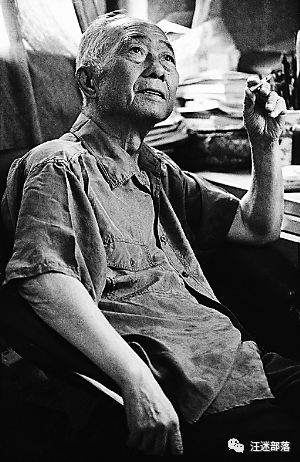
The fortune tellers I've seen all say I'll live a long time. A stranger, a retired driver, recommended to me in a small bar that I could live to be ninety. I'm 71 this year, and how long I can live is uncertain. I hope to live a few more years, to see more of the world, the changes in the country, and the changes in literature.
1991Year6June17Day
(Published in1992March19of the Liberation Daily, Sunday Edition, Comprehensive Section)

TodayRecomBook
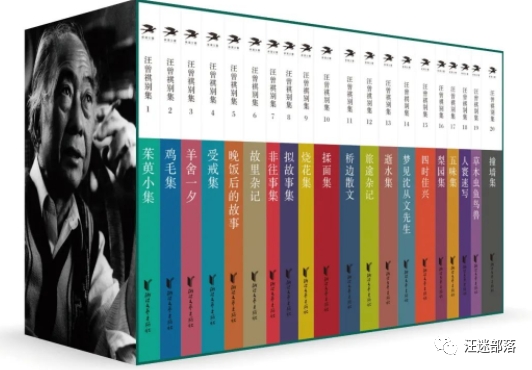
Wang Zengqi's Complete Works(20 volumes, 8
Click on the original text in the lower left corner, purchase from【My We店】
The illustrations, text, and audio in this article that do not have an attributed author.
Please have the author contact WeChat君 to add a note.

Read the original text