Lie flat, this set of using low consumption and slow rhythm to resist the existing order of life logic, has now been added to the youth's sad culture package. Douban popular topic#My“lie flat”Philosophy#The topic description is introduced as follows:
“Lying down is the objective truth of the universe, rest, sleep, or death, the moment of a life full of desires and excitement being still and fading is the truest expression of justice, I choose to lie down, I am no longer afraid.”
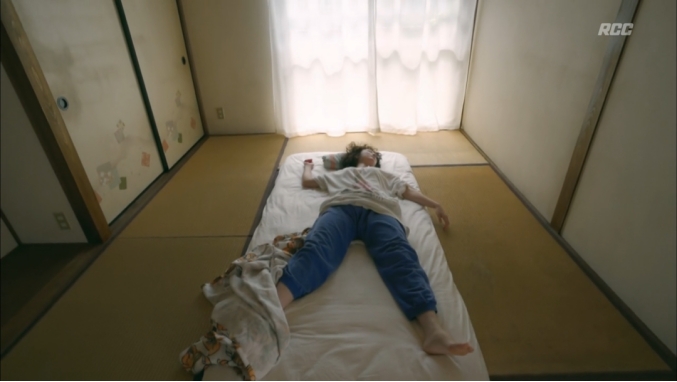
Faced with the pressure of survival, the current young people choose to face life with an attitude of“inaction”.However, for Wang Zengqi, who became famous in his later years and experienced the vicissitudes of war,“lying flat”is indeed commendable, but what is important is that, despite the continuous blows of reality, we still have the strength to embrace life.“Life is very interesting”.
5May16is the 24th anniversary of the death of Mr. Wang Zengqi, let us study his alternative“lie flat”philosophy together.
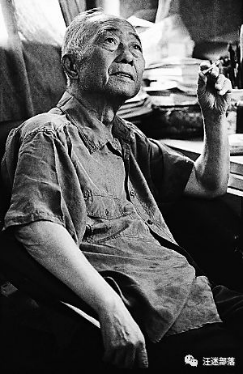
Wang Zengqi(1920.3.5-1997.5.16),a contemporary Chinese writer, essayist, and playwright. He was hailed as“ a lyrical humanist, a pure scholar in the New China, a scholar-official.”His representative works include the short stories "Receiving the戒", "The Big Pool", "The Gift of the Magi", and the essay collections "The Collection of Dinner Flowers", "The Talk of the Late Green", "The Traveler's Snack", etc.

01
Even in the ditches, the moon is still visible above.
Mr. Wang Zengqi has passed away24years ago.
Writers seem to be typecast at an age, mostly because of when they became famous.
Lu Xun always looked like a middle-aged man with a weathered appearance; Zhang Ailing was frozen in her prime in her twenties and thirties; as for Wang Zengqi, he was“cast as”an old man.
It is difficult for readers to imagine that Wang Zengqi and Zhang Ailing were born in the same year and only two years apart in their death.
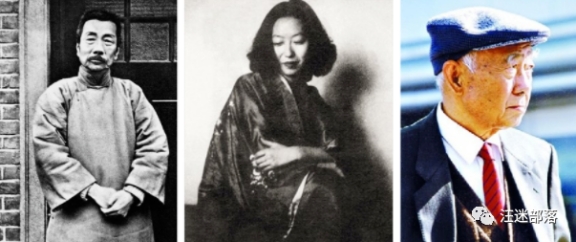
Lu Xun, Zhang Ailing, Wang Zengqi
Wang Zengqi did not become famous until late.
Although he began publishing novels while a sophomore at Southwest Associated University, and has been writing ever since, it was not until his sixties that he truly became famous for works such as "Receiving the戒", "Extraordinary Talent", "The Big Pool".
No wonder many people at the time said that he“realized his potential late”. Wang Zengqi did not like to admit that he was a“late bloomer”, but he had no objection to the“late blooming”thing.
Wang Zengqi's early experiences are not much different from those of ordinary young people today, facing the same pressures of employment and survival,but it is precisely because he has experienced the ups and downs of life that he can burst out in his later years.
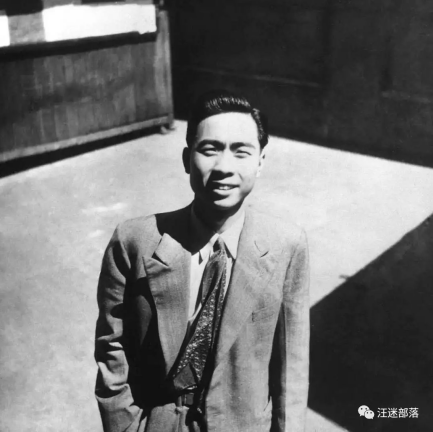
Youth Wang Zengqi
Wang Zengqi was admitted to40the Department of Literature ofNational Southwest Associated Universityin the early 1940s, and came to Yunnan to study with the university. Thousands of miles away from home in the great rear, like many other students of the university, Wang Zengqi's family ran out of living expenses. He was in a tight spot and in a mess.
At that time, Wang Zengqi and his friend, the future linguistZhu Dehui often went out to eat together. Zhu Dehui would carry a thick dictionary with him many times when he went out to eat with Wang Zengqi. After meeting Wang Zengqi, he would sell the dictionary at an old bookstore on the way and get some money to have a meal together.
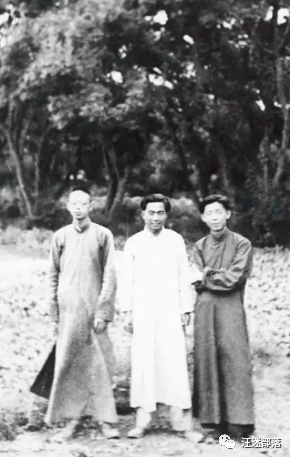
Wang Zengqi (center) and Zhu Dehui (right) at Southwest Associated University
The shadow of war also loomed over them. Japanese bombers often circled above Kunming to intimidate, dropping bombs from time to time, killing and wounding many civilians.
40 years later, Wang Zengqi wrote "Running警Alarms" to recall the scene at that time.In his recollection, the " running alert " of the students of the University of Literature and Science was not慌张 and despondent, but instead a calm interlude in their orderly academic lives. Biology professors continued to teach students with models in caves; young men and women fell in love while running alert; female students took the opportunity to wash their hair and cook lotus seed porridge when everyone was not at school.
Everyone shows"indifference"。
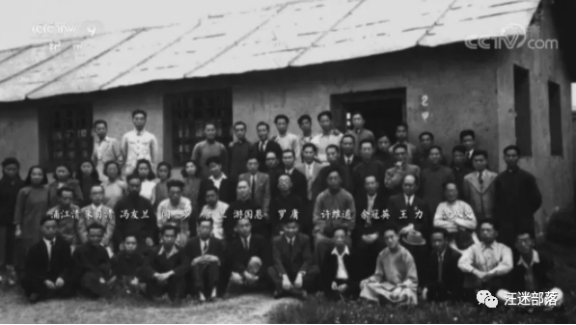
Image source: Documentary "The Southwest Associated University"
Wang Zengqi recorded:
The Japanese sent planes to bomb Kunming, which actually had no real military significance. The intention was simply to scare the people of Kunming, to exert threats and instill fear. They did not know that the Chinese people's psychology has a great deal of elasticity and is not so easily frightened into a state of terror.Our nation, for a long time, has been born in adversity and has become very“sturdy”. For any sudden disaster, we treat it with a“Confucian-Taoist complementarity” spirit. The essence of this“Confucian-Taoist complementarity” is“indifference”. This“indifference” spirit can never be conquered.
However, Wang Zengqi did not receive a diploma from the Southwest Associated University, but only a certificate of “incomplete studies”. The reason was that at that time, university graduates were required to serve in the Nationalist Army and the American troops stationed in China for one year as required by the National Government, in order to graduate smoothly.
Some people say that Wang Zengqi gave up his diploma because he didn't want to serve this year. Others say that he didn't go because he felt that he couldn't wear a decent pair of trousers without holes on the day he joined the army.
The truth is no longer important, from this matter, we can see the kind of free and proud and non-utilitarian temperament in Wang Zengqi's youth.
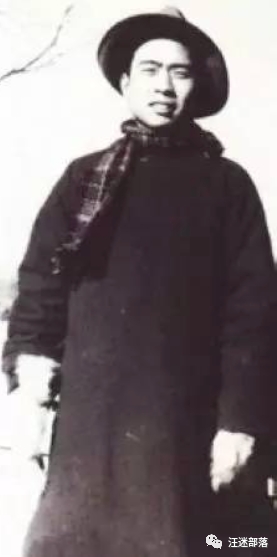
Because he didn't get his diploma, Wang Zengqi couldn't find a job, lived in poverty, and was always unlucky. He even once thought of ending his own life.
“You know, I'm not unwilling to perk up.But I'm like a dog that has fallen into a drainage ditch now; if I can't be sure of finding a pool of clear water, a sunbeam, I simply don't want to get up and have a wash.Because it's not often that people look into a drainage ditch or at me, and once I get out, I'm sure to be covered with other people's eyes!”
Wang Zengqi's mentorShen Congwen wrote a letter to him, scolding him severely, and ended with a sentence:“You have a pen, what are you afraid of?”
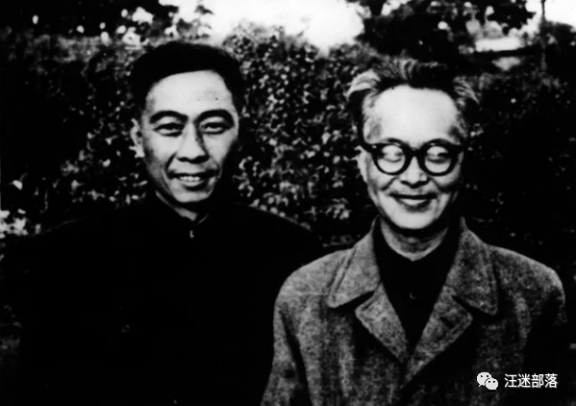
Wang Zengqi and Shen Congwen
Later on, whether it was the dull years of the Historical Museum or“Cultural Revolution” when he was separated from his family, Wang Zengqi's life was not smooth.
But he was in the drainage ditch, and still he could see the moon over his head.

02
“***It's important to have a wide interest in life”
In Wang Zengqi's works, "Yuan Tong" is a common feature.
This kind of roundabout pursuit is not for a deliberate structure, but for what he himself said,“artificial casualness”,you seem to just follow his camera, slowly moving forward, so that the scenery, characters and scenes are all included in your eyes at one time.
He and the world he writes about maintain a just right distance,neither identifying with the characters to narrate their emotions nor being a cold observer, but looking at them with full emotion.
Of course, such a state of flexibility and calmness is not innate to a gentleman.
Wang Zengqi talked about his teachers in his own words, where he mentioned that when he was young, he read a lot of modernist novels from the West, especially fond of the stream of consciousness approach, and preferred innovative writing methods and inner expression.
在他早年的作品《复仇》《落魄》中,文风相当华丽,文字间掩盖不住青年文人的才气和高傲。
多少日子以来,他向上,又向上;升高,降低一点,又升得更高。他爬的山太多了。
山越来越高,山头和山头挤得越来越紧。路越来越小,也越来越模糊。他仿佛看到自己,一个小小的人,向前倾侧着身体,一步一步,在苍青赭赤之间的一条微微的白道上走。
低头,又抬头。看看天,又看看路。路像一条长线,无穷无尽地向前面画过去。云过来,他在影子里;云过去,他亮了。他的衣裙上沾了蒲公英的绒絮,他带它们到远方去。有时一开眼,一只鹰横掠过他的视野。山把所有的变化都留在身上,于是显得亘古不变。
——节选自《复仇》
而到了晚年,早年的锋芒磨去,他选择回归到了古典文学的传统里,不但越写越平实,而且只希望“融奇崛于平淡,纳外来于传统”。尤其是那些谈不上有什么情节,纯粹叙述生活的小说,平淡的文字背后是汪老几十年的功力和心血。
小英子忽然把桨放下,走到船尾,趴在明子的耳朵旁边,小声地说:
“我给你当老婆,你要不要?”
明子眼睛鼓得大大的。
“你说话呀!”
明子说:“嗯。”
“什么叫‘嗯’呀!要不要,要不要?”
明子大声地说:“要!”
“What's that you're shouting!”
Mingzi whispered:“Must——!”
“Hurry up and row!”
Ezhi jumped into the middle cabin, and the two paddles quickly began to stroke, entering the reed marsh. The reeds had just sprouted new ears. The purple-gray reed ears, emitting a silvery glow, were soft and slippery, like a string of silk. Some places had formed water chestnuts, which were red, like a branch of small wax candles. Green duckweed, purple duckweed. Long-legged mosquitoes, water spiders. Wild water lilies were blooming with small white flowers. A green-shafted (a kind of water bird) was startled and flew away, brushing against the reeds, making a "pukulu" sound as it flew away.
……
One九eighty years, August 12th, writing about a dream from forty-three years ago.
——Excerpt from the end of "The Golden Cangaroo"
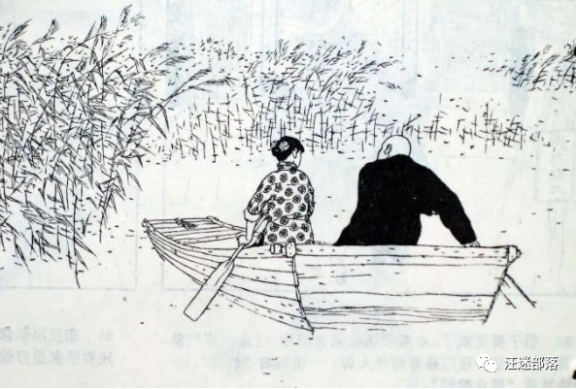
Illustration of "Receiving the Precepts"
No wonder Shi Hang said that the poem that best suits Wang Zengqi is“Already known the vastness of the universe, still fond of the greenness of the grass and trees”. This“Already known” and“Still fond” relationship relies on the long life experience, the choice after experiencing the world.
Wang Zengqi was undoubtedly relaxed, and this relaxation seemed to only appear at that specific age.
However, Wang Zengqi, who was called“old man” by his children, did not want to admit his age.At nearly seventy, he still said that he was not used to being called“old writer”, because he did not feel old.
Close observation will indeed show that this is the case, at least Wang Zengqi's passion for life has nothing to do with the state of being old.He loves food, flowers, opera, writing, and painting....And he has also written these into innocent and interesting articles.
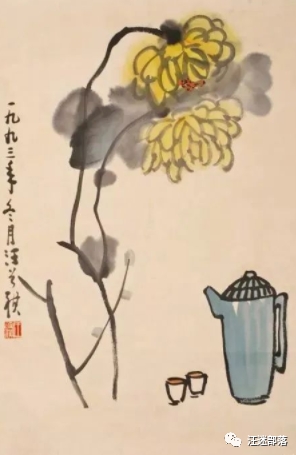
Wang Zengqi's paintings
Mr. Wang Zengqi was a famous glutton, and often went where he pleased, ate where he pleased, and wrote where he pleased.
He recalled his hometown with salted duck eggs and wild vegetables, and after forty years away from Kunming, he still missed the mushrooms of Yunnan. He didn't forget to mention the roast whole lamb in Inner Mongolia, and in Beijing, he didn't miss even the soy milk.
“the Cultural Revolution” period, Mr. Wang Zengqi was transferred to the Potato Research Institute to engage in labor. In his spare time, he竟然 painted a book of more than100varieties of potatoes, which not only includes the growth habits of various types, but also the taste evaluation.It can be seen that the spirit of foodies, even in the face of life's绝境, can make people preserve a sense of humor and a sense of relaxation.
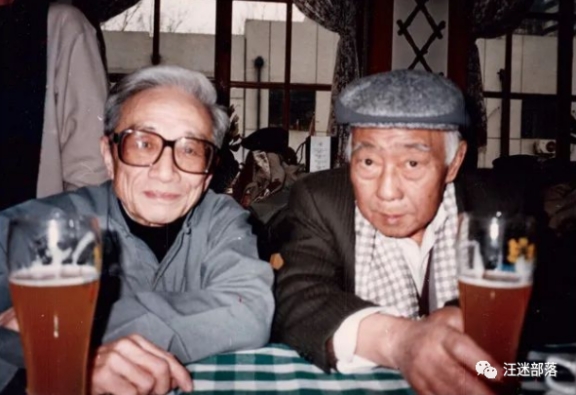
Publisher Fan Yu and Wang Zengqi
Wang Zengqi always had a great passion for these“things”, he always saidthat people should experience more different things, and it's very important to have a wide interest in life.
Eating and Literaturethere is a passage:
Once I bought beef. The woman in front of me was a middle-aged intellectual, a southerner.
It was her turn, and she asked the beef seller:“How is beef cooked?”
I was very curious and asked:“Didn't you make beef?”
“No. We don't eat beef or mutton at home.”
“So you buy beef?”
“My children are old enough to go out to other places. I let them get used to it so they can adapt better when they go out.”
This mother is very conscientious. So I took it upon myself to invite her aside and gave her a lecture on beef cooking methods, from clear stewed, red braised, curry beef, to Guangdong's oyster sauce stir-fried beef, Sichuan's poached beef, dry-fried beef shreds...
Even if we have just eaten a full meal, reading Wang Zengqi's food diary, we are still“ Tempted” by his descriptions, and our stomachs are growling with hunger. This is the charm of Wang Zengqi's writing, which is born from his meticulous observation and understanding of life, and this meticulousness stems from his open-minded and optimistic attitude towards life.
Let's tell another interesting story about Mr. Wang.
After the publication of the nationwide sensation "Receiving the戒", Wang Zengqi received many letters from readers asking him“if he had been a monk”,which often left him laughing and crying.
Later, an invitation to contribute an essay on the creation of "Taking the Monastery" came, and he took the opportunity to include a playful admission at the beginning of the essay:“I have never been a monk”.
It was in the same article that he left such a phrase:
“The inherent mood of my work is joyful. We have had various traumas, but we should be happy today. A writer has a responsibility to give people a sense of joy, especially today.”
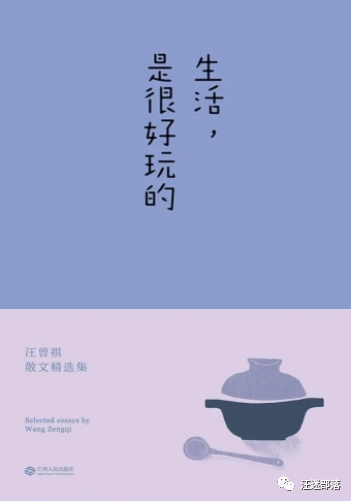
This may explain why so many people have felt a pure joy in the works of the gentleman. It is not only the result of the linguistic context, but also the strong will of the writer. And this, without a doubt, is the fortune of all readers.
Having learned Mr. Wang's philosophy of life, even though the real world is crowded and full of hills and valleys, we still have the leisure and the heart to embrace those things that expand the width of life, such as calligraphy, painting, and fine food.

TodayRecomBook
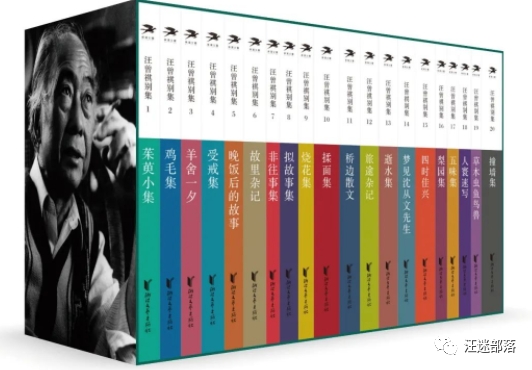
The Complete Works of Wang Zengqi20
Click on the original text in the lower left corner, purchase from【My We店】
The illustrations, text, and audio in this article that do not have an attributed author.
Please have the author contact WeChat君 to add a note.