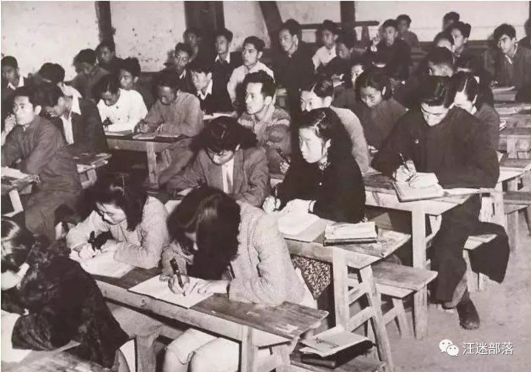
There was a history professor at the Southwest Associated University,-I heard it was Mr. Lei Haizong. One of his courses was so familiar to him that he did not need to prepare before class; when class was over, he would stop where he had reached, and he himself did not remember. Every time he came to class, he would first ask the students:“Where did I leave off last time?”And then he would continue to talk fluently. There was a female student in the class who took the most detailed notes, not missing a word. Mr. Lei once asked her:“What did I say at the end of the last class?”This female student opened her notebook, looked at it, and said:“You said at the end last time:‘Now there is an air-raid warning, let's end class.’”
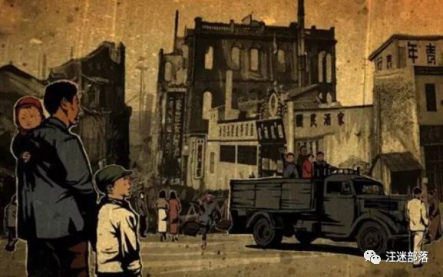
This story shows the frequency of the Kunming air raids. When I first arrived in Kunming, in the first two years, 1939 and 1940○, there were alarms every other day. Sometimes there were alarms every day, even twice a day. Kunming at that time could hardly be said to have any air defense forces, and Japanese planes could come whenever they wanted. Sometimes they even broadcast on the first day: twenty-seven planes will come to Kunming for a bombing tomorrow. The Japanese air command really meant what they said, and they came!
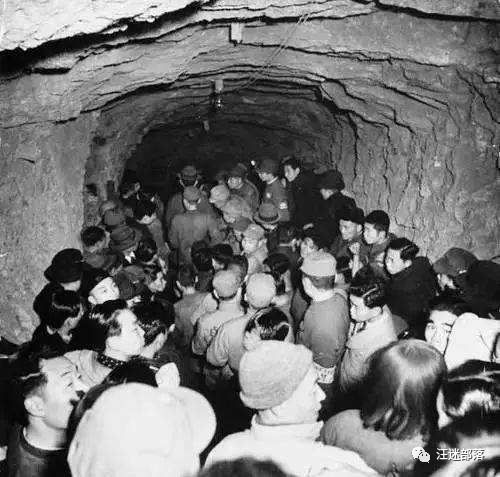
When an alarm sounds, there is no other way, everyone rushes to the suburbs, which is called“running the alarm”.“running” and “alarm” combined together form a word, if you think about it, it's a bit peculiar, because what is being run from is not the alarm. This is not like“running the horse”, “running the business” so smooth. But everyone calls it this way, everyone understands, and it seems very appropriate. There are also those who call it“running from the alarm” or “hiding from the alarm”, but none of them is as accurate as “running the alarm”.“hiding” is too passive; “running” is too embarrassed. Only this “running” word is calm and elegant in the tense situation, and it can express a rich and vivid content.
There was a student surnamed Ma who was the best at giving the alarm. He got up early to look at the sky, and as long as it was clear, whether there was an alarm or not, he would carry a pot of water, a bit of food, and a roll of poems by Wen Feiqing or Li Shangyin, and walk to the suburbs. He would only return slowly when the sun was in the west and he estimated that the Japanese planes would not come. Such people are not many.
There are three kinds of alarms. If in forty odd years ago one introduced the kinds of alarms, it would be considered as"insane", which is known to all. However, for the young of today, it is a new problem. One is"pre警报".
There was a student in the League with the surname Hou, who was originally a student at the Aviation School, and was eliminated because of his slow-wittedness. He enrolled in the Department of Philosophy and Psychology at the League. This person did not forget his aviation connections and once used a yellow“propaganda paper”to post a large“advertising”, holding an academic report titled "Anti-Aircraft Knowledge". He did not know why he was particularly sensitive to“alarms”. He was in class listening to the lecture, but suddenly ran out, stood on the north-south passage of“the new school building”, and shouted loudly:“There is a pre-alarm now, and three red balls are hanging at Wuhua Mountain!”Indeed! Looking up to the south, three large red balls were really hanging at Wuhua Mountain. Wuhua Mountain is the highest point in Kunming, and the red balls hanging there can be seen throughout the city. We have always been very curious: How could he“feel”that Wuhua Mountain had hung red balls while he was listening to the lecture in the classroom?—The doors and windows of the classroom do not all face Wuhua Mountain.
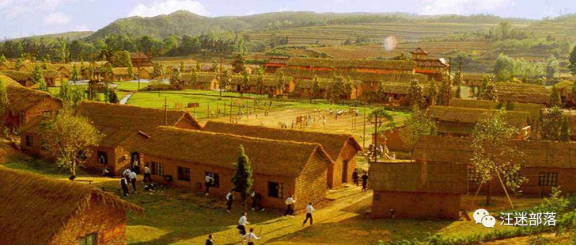
When a pre警 signal is given, the people of the city start moving towards the suburbs. Those living north of Cuihu Lake usually exit through the North Gate or the Great West Gate, with most choosing the Great West Gate. Outside the Great West Gate, beyond the highway in front of the new campus of the Southwest Associated University, there is a narrow road about five or six feet wide, paved with round stones. This road is said to be an ancient post road, which can still reach the western part of Yunnan. The road runs through a mountain valley. Not many people usually walk on it. What is often seen are groups of mules carrying salt, sugar, or other goods. The muleteers, sitting sideways on wooden saddles, blow whistles through their teeth (muleteers always blow whistles in this way, without pursing their lips), or sing softly to the " Tune of Chénggòng":
Brother, the one who is on the highest mountain, let go, let go, let go the cow.
My sister combs her hair in the garden.
Brother, the one who is calling in the highest mountain,
Sister, the one in the Zhi Garden, points and nods.
These long-distance merchants have their special dress. They wear a white sheep-skin vest over their short gowns, with a cool hat hanging behind their heads, and on their feet are sandals with thick cowhide soles, often embroidered with flowers and studded with shiny"Devil Winking" sequins.——I have never seen anyone in other occupations wearing this kind of shoes, which seem to be worn only by the merchants. As they walk along this ancient road with the jingling of the bells on the horses' heads, it has a certain romantic flavor and sometimes arouses a touch of homesickness in the hearts of the travelers.…
With the pre-march warning, the ancient post road became lively. People from different directions flocked here, forming a river of people. As they walked a while, getting further away from the city, they scattered to the mountains on both sides of the ancient road, each finding a suitable place to stay, waiting calmly,——waiting for the air-raid warning.
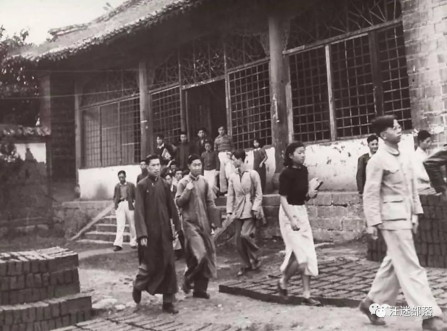
Students of the Southwest Associated University did not usually run when they saw the pre-raid alert, and they had to wait until they heard the air-raid alert: a short and a long blast on the whistle, before they started to move. There was a back door on the north side of the new campus, and out of the door and across the railway (of which there was no knowledge of the starting and ending points, and no trains were ever seen to pass) was the mountain and the fields. There was time to leave if they wanted to.——So Mr. Lei“could say now there was an air-raid alert”. When there was only a pre-raid alert, the teachers and students of the university usually went to class as usual.
The alarm runs all over the place with no fixed location. But people also have habits, they are used to running to where and willing to go where. Most of them find a grave to lean on. There are many graves with steles in Kunming, and the steles not only have the name of the deceased engraved, but also the "× Mountain × Direction", and the "four boundaries" of the grave plot. I have not seen this custom anywhere else. This is probably also an ancient custom.
Say it's all over the place, but there are also a few more concentrated"spots". On one side of the ancient post road, not far from the Language Research Institute's library, there is a stand of pine trees, which is one such spot. This place, in addition to being close to the school, has a lush stand of pine trees, with a thick layer of dried pine needles under the trees, which is soft and comfortable, and the air is good,—the pine trees emit a strong pine resin smell, basking in the sunlight filtering through the pine branches, or looking up at the sky above the pine trees, which is so blue it seems to drip, are all extremely comfortable, and also because you can buy all kinds of snacks here. In Kunming, vendors come to the suburbs with their担es when the alarm goes off. Everything is available. The most common is"丁丁 sugar".
“丁丁糖”is maltose, the same as the Kanto sugar used by the Beijingers to offer to the Kitchen God, but it is made into a large sugar cake with a diameter of more than a foot and a thickness of about an inch, placed on a square wooden plate. When someone offers money to buy it, the sugar vendor inserts an iron piece in the shape of a plane into the edge of the sugar, and then uses a small iron hammer to strike the iron piece, and the sugar breaks off with a "ting" sound,——so it is called“丁丁糖”. Next is roasted pine nuts. There are many pine nuts in Kunming, large, thin-skinned and full of kernel, very fragrant and cheap. Sometimes we can find a big mature green pine cone under the pine tree, and then we break open the scales and eat the pine nuts one by one.——back then, our teeth were all very good, and the hard pine nut shells could be cracked open with just one bite!
Another focus is farther away, requiring a walk of four or five li along the ancient post road. On the higher earthen hill on the right side of the road, there is a transverse mountain gully (probably caused by an earthquake in a certain year), which is about three zhang deep, about two zhang wide at the mouth of the gully, and also six or seven feet wide at the bottom. This is a very good natural air-raid shelter. If Japanese planes drop bombs, as long as they do not hit directly, falling into the gully, even if they explode at the top of the gully, the shrapnel is not easy to jump in. Machine gun sweeping is also no problem, the two walls of the gully are dead ends. This gully can accommodate hundreds of people. Some people often come here and use their spare time to repair some private air-raid shelters on the walls of the gully, which are of different sizes and forms. These air-raid shelters are not only smooth on the surface, but some are also inlaid with patterns or pieces of broken stones or broken porcelain, and strung into couplets. Most of the couplets are very innovative.
I still remember two pairs, one is:
Life is a geometric figure
Love triangle
A pair is:
Act according to the opportunity
Rest in peace
The dilettante of the couplet weaver is very admirable. The former is probably a reflection of the moment, and the latter is a realistic record.
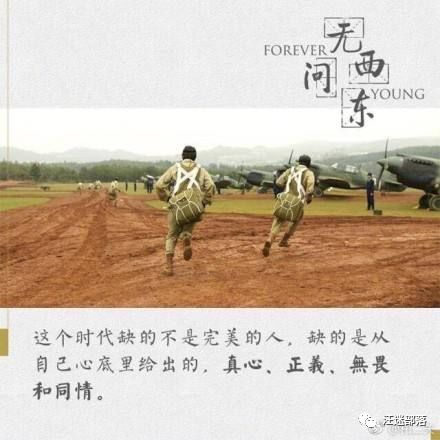
There are three kinds of air-raids. The first is a warning that Japanese planes have taken off. The siren is then used to indicate that Japanese planes have entered the territory of Yunnan Province, but this does not necessarily mean that they are coming to Kunming. The emergency alarm is blown when the train whistle is heard: a series of short notes, and this is the signal that the planes are definitely coming towards Kunming. Between the air-raid siren and the emergency alarm there is sometimes a long interval, so those who arrive here are not in a hurry to go to the caves.——The caves are not sunny and it is also very boring to sit in one's cave too early, like the Yungang Grottoes. So most people read, chat, and play Mahjong in the caves. Many people do not move when they hear the emergency alarm, because the Japanese planes do not always come after the emergency alarm. Often they turn back somewhere else. One has to wait until one sees the shadow of the planes before getting up, going to the caves, and entering them. The students of the university and those who live in Kunming are so experienced in going to the caves that they are never in a hurry.
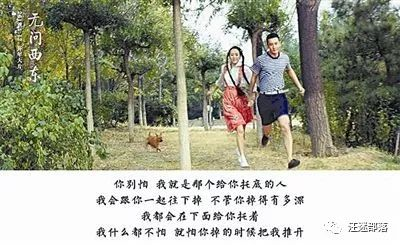
The previous couplet, though a general sigh, also has practical significance. Running an air-raid drill is an opportunity to fall in love. Many couples run an air-raid drill together at the university. When the air-raid drill sounds, the boys wait by the roadside of the new school building, sometimes even carrying a bag of snacks such as sweetmeats and peanuts....The girl student came, "Hi!"So they walked out of the back door of the new school building hand in hand. Running an air-raid drill may not be to share weal and woe, but there is a sense of danger, which is different from watching movies or strolling around Cuihu Lake. This sense of danger brings the two closer together. The girl student is happy to be waited on, and the boy student can also be attentive and show a bit of knightly spirit. As Sun Wukong said in Gaolao Zhuang:"First, it can cure bad eyesight, and second, it can take care of the doctor. This is a win-win deal.". From this point of view, running an air-raid drill is quite romantic. With love, there is a triangle, and there is a loss of love. The "couple"of running an air-raid drill is not always fixed. Sometimes one party is "dumped"by the other party, and the two "吹"," and the "couple"needs to be reassembled. The one who wrote (let's call it)"write"is probably a boy student who was "dumped". However, it is not necessarily so.
The alarm might last a long time, two or three hours, and was also"boring.After the emergency alarm, when the Japanese planes had finished bombing, people relaxed. Soon after,"the all-clear" sounded: the whistle blew a long note, and everyone stood up, dusted themselves down, and stream after stream went back into the town. But not all went back when the all-clear sounded. Many people went back as soon as the dark clouds appeared in the sky, for they thought it was going to rain. If it rained, the Japanese planes would not come. It was no use being wet in the open air! As soon as it rained, one of our boys would surely be the first to rush back, and that was the boy who had reported the pre警. He rushed back to the new school building and collected a lot of umbrellas from the dormitories and put them outside the back door of the new school building. When a girl came, he would hand her one. He was afraid that these girls would get wet. This boy, Hou, was big and strong, but he had a heart like Jia Baoyu. He had probably been influenced by Mr. Wu Yu Sheng's "Dream of the Red Chamber". Hou兄 sending umbrellas had become a fixed routine. The alarm and the rain, never missed. Famous throughout the school, it was贵in perseverance."These umbrellas, after the rain stopped, he would go to the girls' dormitory in the south yard to collect back, and then return them to their owners.
Sound the alarm, and everyone will be carrying something valuable. The most convenient is gold,——gold rings. A graduate student in philosophy once made such a logical argument: someone who carries gold must lose gold, someone who loses gold will have someone who finds gold, and I am a person, so I can find gold. Therefore, when he sounds the alarm, especially after the alarm is lifted, he always pays close attention to the road. He really picked up two gold rings! The wonderful use of logic is probably not what Mr. Jin Yuelin, who teaches logic, expected.
When the teachers and students of the Southwest Associated University went for a air-raid drill, they had nothing to take, for they had nothing. They usually took two books or a manuscript of their papers. A Mr. Jin, who was studying Indian philosophy, always took with him a very small handbag when he went for a drill. There was nothing in the bag but a number of love letters written to him by a girl. He cherished these letters as if they were his life, and sometimes he would take out one or two to show to others. There was nothing shocking in them, for they were not love letters in the ordinary sense, but the feelings of a clever woman towards life, and they were full of English-type智慧 and were very well written. They were really worth publishing. Mr. Jin had kept them for many years, but now I dare say they have disappeared, which is a pity. I have seen a photograph of the girl, and she looked just as she wrote in her letters.
There were also students who did not run the alarm, as far as I know, there were two. One was a female student, surnamed Luo. Whenever there was an alarm, she would wash her hair. When everyone else had left, no one was using the hot water in the boiler room, and she could take a bath as much as she wanted, with as much water as she wanted! The other was a Guangdong student, surnamed Zheng. He loved eating lotus seeds. Whenever there was an alarm, he would use a large wash basin to go to the boiler fire口 to cook lotus seeds. When the alarm was lifted, his lotus seeds were also cooked. Once, Japanese planes bombed the university, and both the northern and southern campuses of Kunming were dropped bombs. This old brother Zheng, while listening to the bombs exploding not far away, was still stirring his rock sugar lotus seeds next to the boiler of the new school library with a calm expression.
During the war, how many times there were air-attacks in Kunming and how many times Japanese aeroplanes came, is un记录able. There were, of course, some casualties and houses destroyed. I remember that once, outside the gate of Dong, there was a machine-gunning of the fields and quite a number of people were killed. Inside the gate of Xī, in a small wood, several horses, carrying firewood, were blown up. There does not seem to have been any greater loss of life. Air-attacks and bombardments did not leave the impression of a scene of blood and ashes.
The Japanese sent airplanes to bomb Kunming, but in fact, there was no real military significance. The intention was simply to scare the people of Kunming, to threaten and instill fear. They did not know that the Chinese people's psychology has a great deal of elasticity and is not so easily frightened. Our nation, for a long time, has been born in adversity and has become very“resilient”. For any sudden disaster, we treat it with a“Confucian-Taoist complementarity” spirit. The essence of this“Confucian-Taoist complementarity” is“indifference”. This“indifference” spirit is forever unyielding.
To reflect“indifference”, the poem "The Alarm".
December 6, 1984
Follow Mr. Wang to appreciate beautiful writing
Appreciating the scenery with Mr. Wang
Follow old Wang to taste the delicacies
Wangaddict, Wang fan……Who is the most iron, who is the most popular, it's up to you:“Century Wang Lao”The internet celebrity's Weibo selection activity has sounded the gong and opened the curtain!(For details, please click to read)
The illustrations, text, and audio in this article that do not have an indicated author.
Please have the author contact WeChat to add a note.

2020Year3March5is the 100th anniversary of Mr. Wang Zengqi's birth. In response to the call of the vast number of Wang fans, the Wang Fan Club has planned and organized the”Centennial Wang Zengqi“Wang Fan Club Literature Award Voting Open Competition, with the voting deadline set for2020Year2March8at midnight (the 15th day of the first lunar month, Wang Zengqi's lunar birthday). For details, please clickRead Original↓↓↓↓↓
Big news: Guangdong People's Publishing House, in order to reward the vast number of Wang fans, will present a copy of "Liao Chai Xin Yi" to each of the top ten Wang fans selected through the ""Centennial Wang Zengqi"Wang Fan Club Literature Award投票海选活动留言评选!!!